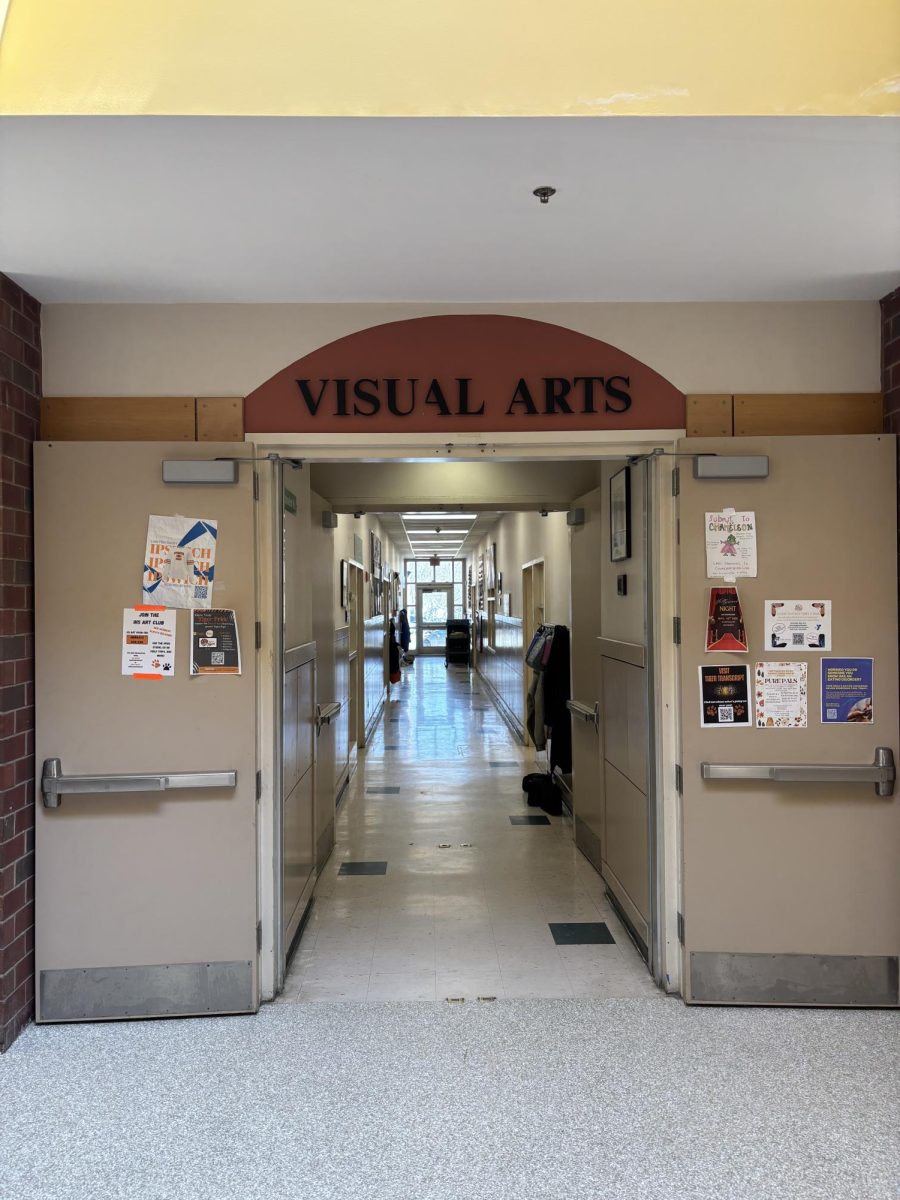
I think it’s safe to say that most of us have taken at least one art class at some point in our school journey. I think we all remember having art in middle school with Mrs. Eaton, making ceramic bugs and learning about the Fibonacci sequence. In high school, we were exposed to a wider variety of options, including ceramics, printmaking, and even film studies. Even going all the way back to elementary school, where we learned about watercolors. Whether we realized it or not, art classes impacted our educational journey.
Studies show that art in education provides a wide array of benefits. For example, a study from the American Academy of Arts and Sciences says that art in education builds “well-rounded individuals” and “builds empathy, reduces intolerance, and generates acceptance of others,” all of which are essential for building strong, lasting relationships. Similarly, a study from The 74 found that “being involved in the arts helps students perform better academically and develop critical life skills like problem-solving, collaboration, and adaptability. Students with four years of arts or music education have a graduation rate of 90%, compared to 73% for those without.” Another study from the National Endowment for the Arts emphasized the importance of art for younger students, finding that “At-home arts engagement of toddlers, preschoolers, and kindergarteners was positively correlated with a variety of social-emotional attributes and cognitive outcomes”.
Interviews around the school provided a wide variety of perspectives. Yannis Christ, a senior, said that he’s been drawing for as long as he can remember and believes that “Art in education is beneficial because it helps reduce stress and improve focus in other classes.” Ms. Morris described how art has impacted her. Her mother was an art teacher, so art was always a part of her life, but in school, options for classes were unfortunately more limited. As an art teacher, she wants to allow students to explore all sorts of things and be creative. She explained that she believed that, no matter what the future may hold, “Creativity is the only sure thing we can teach kids for the future,” meaning we will always need creative people to solve problems that arise. Biffy Murray, who runs Tiger Tots, outlined for us some more direct benefits, such as fine and gross motor skills, opening neural pathways, and fostering creativity.
Speaking as a student who has taken a lot of art classes and made a lot of art in school and loves making art, it’s important. Art provides a great way to express oneself, relieve stress, be creative, and connect with others. I have even used it to connect with the tiger tots, whether I’m being asked to draw Pokémon, families, or even a stick. I have lots of fond memories of making art in school, and it has always been one of my favorite parts, especially since I never loved school. While schools don’t always prioritize the arts the way we think they should, we are lucky enough to go to a school with tons of art opportunities and many creative people. Even outside of traditional arts, we also have amazing music and performing arts programs. As the future continues to look uncertain, we can only hope art isn’t something tossed to the sidelines. Because without art, earth is just “eh”.