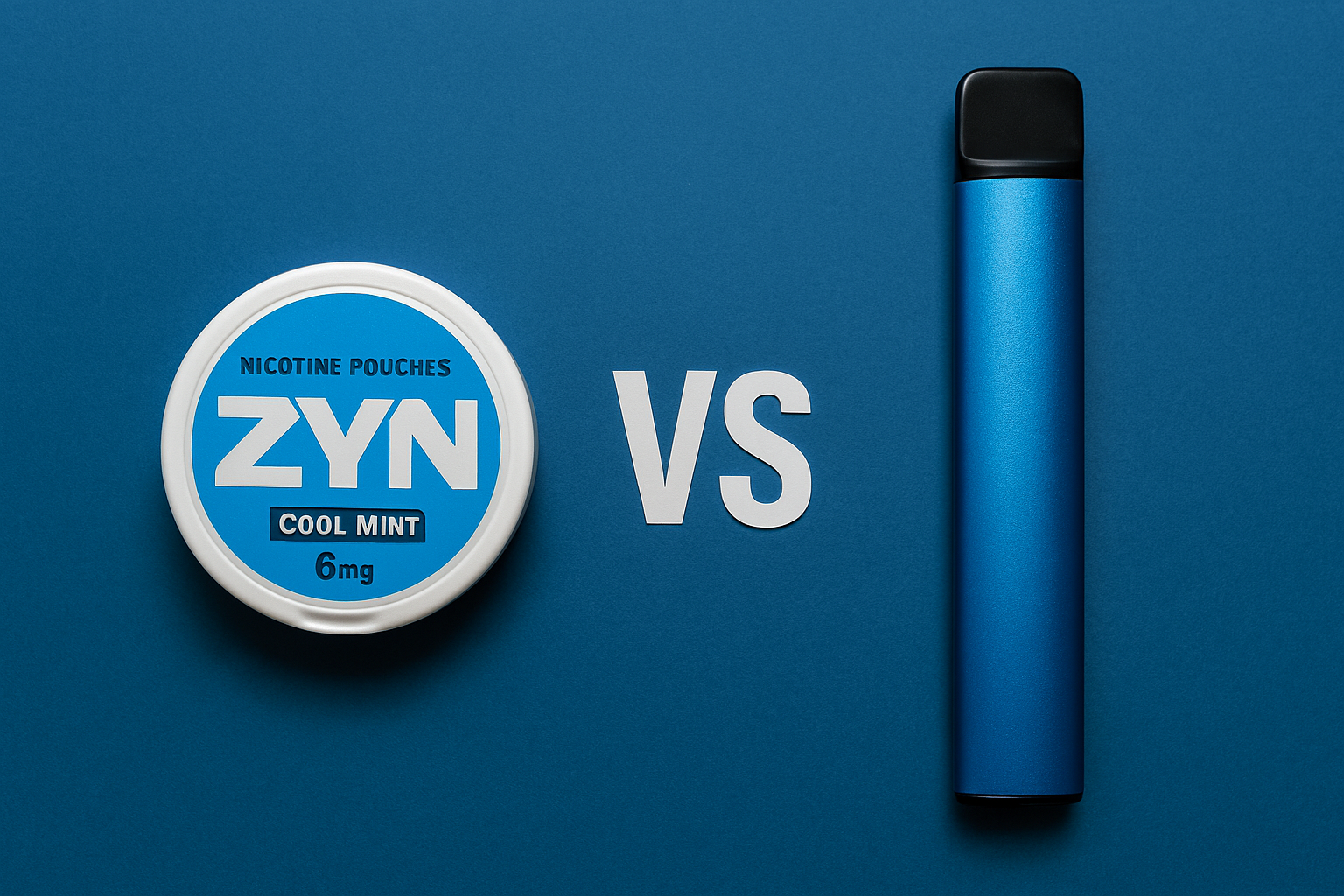
Over the past few years, oral nicotine products like Zyn have quietly gained popularity among students. These tiny white pouches, designed to deliver nicotine through the mouth rather than the lungs, are often promoted as a cleaner, supposedly safer option compared to smoking or vaping. Still, one can’t help but wonder, are they actually a better choice, or simply another version of the same problem?
What are Zyns?
According to the Houston Methodist Hospital, nicotine pouches contain “nicotine in the form of salt or powder, along with other ingredients that help stabilize, fill, sweeten and preserve the product.” They allow the nicotine to be absorbed through the mouth’s lining rather than inhaled. Many adults use them as a tool to quit smoking, but experts warn that they are not risk-free. Dr. Zambrano Hill stated that while pouches “are associated with less of the risks for cancer and other health issues as compared to cigarettes,” the FDA still emphasizes that “there is no safe tobacco product.”
The Effects of Nicotine
When it comes to health, nicotine has both negative and potential positive effects. Studies from the National Institutes of Health show that nicotine can improve focus, alertness, and memory by stimulating certain neurotransmitters. According to Ahmed Alhowail on PubMed Central, nicotine can help improve brain functionality in many ways including helping patients that suffer from Alzheimer’s Disease, Parkinson’s Disease, and Thyroid Disease. “nicotine administration may have a beneficial effect on the cognitive decline observed in AD… nicotine may help improve some symptoms of PD, such as dyskinesia and memory impairments… Consistently, acute nicotine administration was found to improve memory impairments caused by sleep deprivation” Additionally nicotine stimulates the protein enzyme calcineurin, which helps the immune system and muscle protein synthesis (muscle growth).
However, these benefits do not come without risks. Nicotine alone has a long list of side effects including indigestion, heartburn, disturbed sleep, increased blood pressure, and is highly addictive. Additionally paired with the chemicals found in vapes the consequences can be major with health concerns being lung cancer, asthma, as well as organ damage in the heart and brain. Zyns on the other hand have been found to be non cancerous in the short term according to Vaughan W. Rees, director of the Center for Global Tobacco Control at the Harvard T.H. Chan School of Public Health. This is because they are lacking most of the chemicals and oils that vapes have that are so detrimental to our health. Rees, however, clearly states this doesn’t mean we should start doing them. “Although it does not cause cancer, nicotine causes dependence and may increase the risk of cardiovascular disease in people who do not already use nicotine products.” Although Zyns do have less toxicity than tobacco, she believes that people could get addicted to nicotine because they wanted to try “harmless” Zyns, thus creating more unaware addicted users.
Nicotine in School
1.8% of students across the US reported using oral nicotine products, although a small percentage, it represents over 13.5 million students. Peer pressure, social media, and stress relief could all play a role in taking oral nicotine use from 100,000 in 2016 to over 46 million in 2025. Even though that number is including outside of school, it still shows the growing popularity. However, what is happening inside the class isn’t so simple. According to Mr. Wood “I don’t see a disruption in my class,;I have my suspicions but I cannot say for sure.” As well as other anonymous students agreeing with him. “I think people are just doing their own thing; it has never impacted my own learning. You do whatever you want to yourself.”
While it is hard to find a direct link between disruption, many students see it as quite the opposite. “I believe I work better with nicotine. I feel awake and enjoy my class. I stay present as well.” Another student said “I see a lot of people vaping in the bathroom,;however, oral nicotine products means you never have to take time out of class.” Although these students were all for these methods the majority of students were still against the use.
While it is easy to go pointing fingers at students, administrators, or parents we are not against each other. In an interview with Ipswich principal Mr. Mitchell he brought up a very interesting point, “I know people think like I’m like the vape police and trying to crack down on this activity, but it’s coming from a place of concern about our kids’ health. You know we we want them to grow academically but we also want them to make healthy choices about their life because they’re making decisions now that are going to impact them long term; they might not realize it, but 10-15 years in the future they will regret the damage they’ve done to themselves.”