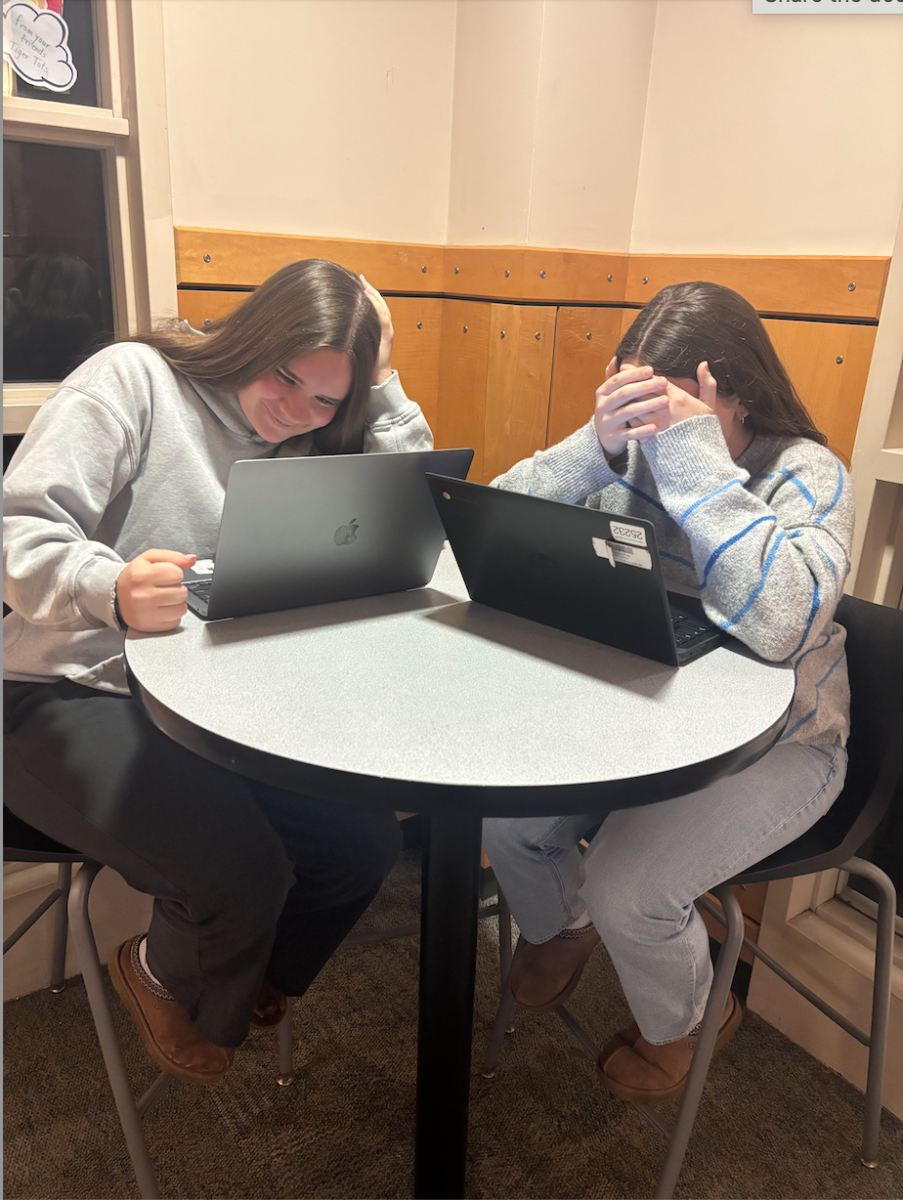

To sleep or not to sleep: this becomes the question high school students wrestle with nightly. Teens at Ipswich High school are involved, and it shows. Ipswich is currently seated 100th in the US News and World Report Rankings of High Schools in Massachusetts- an impressive rank considering Massachusetts has the top public schools in the nation. This is because of the performances of hardworking students, who spend their hours ensuring they put their best foot forward. Now, according to NBC Boston news, Massachusetts officials are wrestling with a new question: what’s the cost of all the pressure?
Massachusetts isn’t blazing any trails. According to the American Psychological Association, 500 schools have shifted their start times in the last 25 years due to the overwhelming amount of research. Now, it’s our turn to think on it. Even the National Institutes of Health agrees. The NIH published a study all the way back in 2009 that detailed how, biologically, teenagers have a circadian rhythm better suited to the later start time. Their internal clock is skewed with the onset of puberty, making it harder for the pressure for sleep to build and therefore harder to fall asleep earlier. Younger children, however, can easily fall asleep earlier and wake up earlier. So why are we operating the way we do?
Senior Ben Ranier is asking the same questions. When asked what his daily schedule looked like, his frustration becomes immediately apparent. “I have hockey after school every day and don’t get home ‘til 6,” Ben exclaims, adding that homework “doesn’t help” his lack of sleep. Mr. Rainier’s experience is not an unpopular one, however, as classmates Shamus Bowser and Jack Machaiek look on nodding as he details how stressed he is “all the time.” “They just throw a lot of information at us at once,” he says, “especially here.”
Ben is feeling the pressure that many seniors do, especially around this time of year. The daunting task of college applications looms over the class of ‘26 like a storm cloud, making the air thick with panic. The American Psychological Association has noted students like Ben and have spent time researching the later start time. They have found schools with start times between 8:30am and 8:59am had students that performed better academically and were generally happier than those with earlier start times.
The former head of the IHS Teachers’ Union, Mrs. Slawson, spoke with me on the issue of sleep in schools. Mrs. Slawson was actually the first person to mention the new Massachusetts’ law that is in the process of being reviewed. She enthusiastically explained her support for the law- proposing that schools in MA must start at 8:30am or later, stating that it is “what is best for students.”
Mrs. Slawson went on to acknowledge the issues with this bill, these being the fact that schools would have to flip their elementary schools start times and their high school start times as well as bussing changes. Still, she went on to reform her prior concerns by speaking on the morning EDP program to assist elementary school parents who cannot care for their children in the morning because of work, whereas middle and high school aged kids are old enough to care for themselves in the morning.
Mrs. Slawson sees the excellence in her students. She sees their efforts, but, as Ben explains, teenagers are being spread too thin. There are few updates on the bill as of right now, but why not discuss this issue as a safety concern to the high schoolers in Ipswich.
Our student body is hardworking and exceptional. It is the job of educators and lawmakers to push these kids to be the best they can while also ensuring that student health is a priority. No student body can be functional without healthy student bodies. Sleep is a health concern, but it is just as much an academic concern. We need to listen to the ones performing in tests, the ones putting their best foot forward, the ones spreading themselves so think and so wide. We need to listen to biology. It’s time to make a change.