Dissections are a classic in education.They have been used in schools since the 16th century for medical students to practice on. In the 1920s they became popular in high school, now about 75% of students do at least one dissection by the time they graduate. Dissections have revolutionized biology, and are a huge part of what we know about the human body now. More recently, the ethics of dissection are being questioned. Many say it is inhumane and models can be just as beneficial.
Animal Free Science Advocacy is an organization who is advocating against the use of dissections in science. They believe that the animals that are killed every year for dissection, including pigs, frogs, and chickens, are unethically being used for dissections. They believe it is outdated, as it originated during the 1920s. Technology has advanced tremendously since then, so they believe online models can serve as a better alternative to dissections.
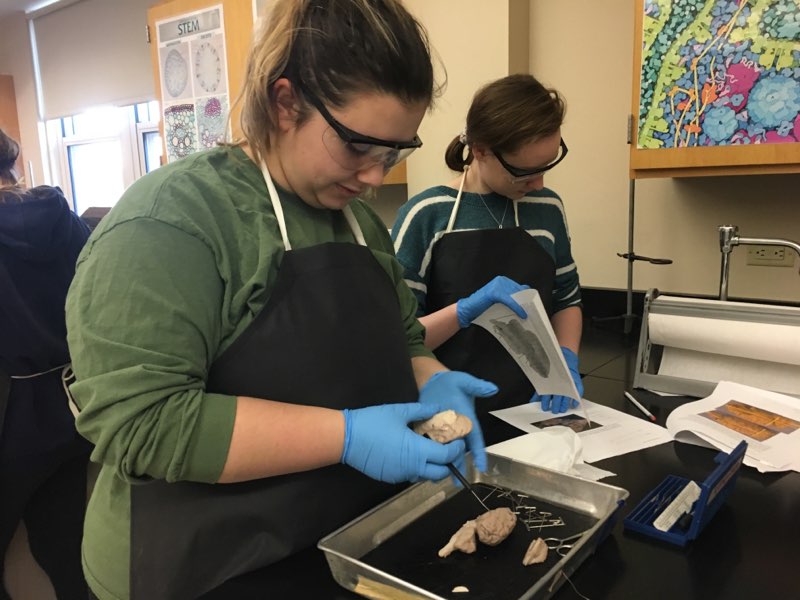
Anatomy teacher Ms. Barclay has a completely different perspective of dissections. She said, “They are powerful for students to make connections with the real tissues and organs that are learned in the classroom.” She loves the “ahah” moment when students first see the inside of an animal, which leads them to make new connections and moments of realization that models can not replicate. Models, although they can be helpful, will not give students that same realization as feeling the real tissues and organs would.
Jack Allen, a former anatomy student, when asked if he would rather use a model he replied, “No, that’s lame. I want to see the real thing, and feel better prepared in case I, or other people, go into a medical profession, and seeing the real thing is a good way to visualize all the terms we learn in class.”
Ms. Barclay remembers when Mr.Mitchell became principal he wanted to get rid of dissections because his old school did not do them. Ms. Barclay became frantic because they are one of her favorite parts of her anatomy class, and believe they are a vital part of the class. Mr.Mitchell later saw students dissecting the sheep brain, and realized that they do serve beneficial purposes for the students and we should continue doing them.
Although Ms. Barclay believes that the pros outway the cons, she does have a few concerns. One being that teachers should hold off including dissections in the curriculum until the student is old and mature enough to handle one, and have the capability to learn valuable information from it. AP and higher level courses, for example, should be using the tool of dissections in their curriculum as the students generally have a higher level of understanding.
Another main concern she has is that all animals are treated with respect, and live a full life, before being used for science purposes. She also emphasizes that no parts of the animal should go to waste, like the cow eyeball and sheep brain for example. They both are leftover parts of the animal, after the animal has been slaughtered for its meat.
Dissections are a big and exciting part of the science classes here at Ipswich. Not every high school student is able to have access to this opportunity. Ms. Barclay hopes to eventually get the animal parts from a local farm, rather than a factory to ensure that the animals had a great life. The high school should continue dissections because they help further education of the students, and serve beneficial towards understanding the concepts of anatomy.