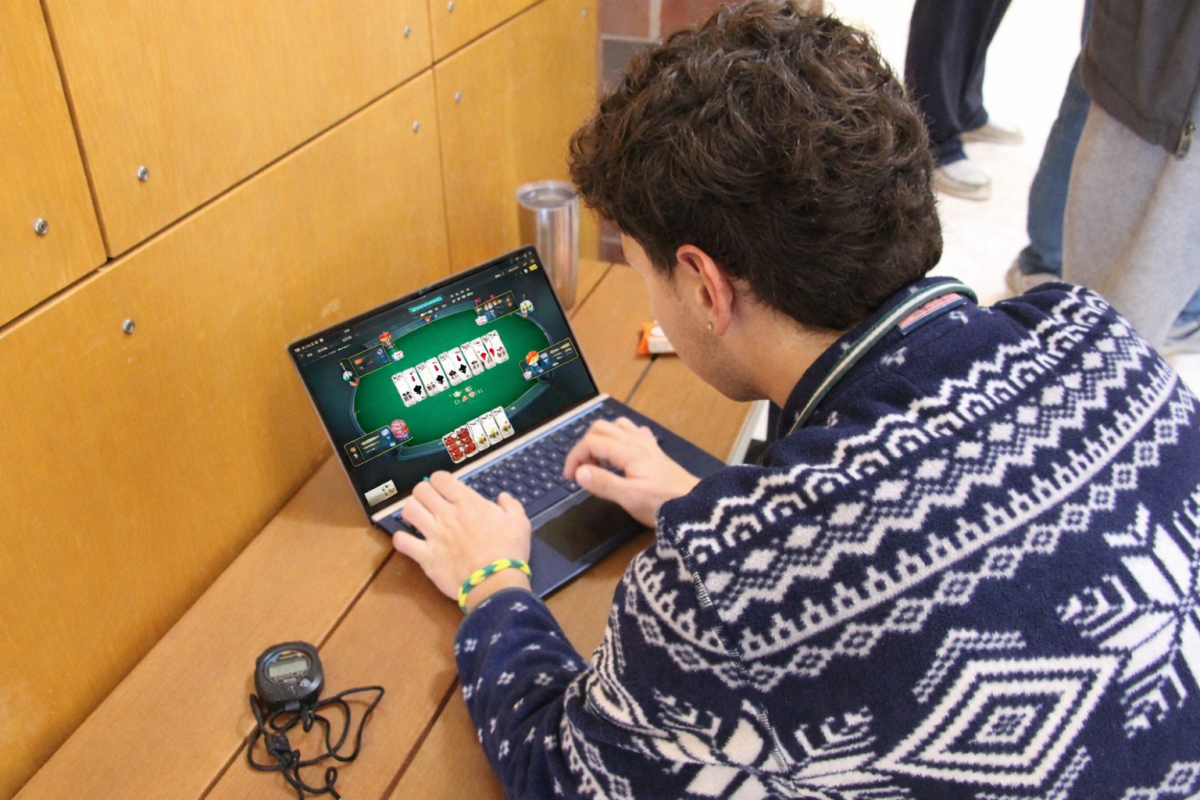
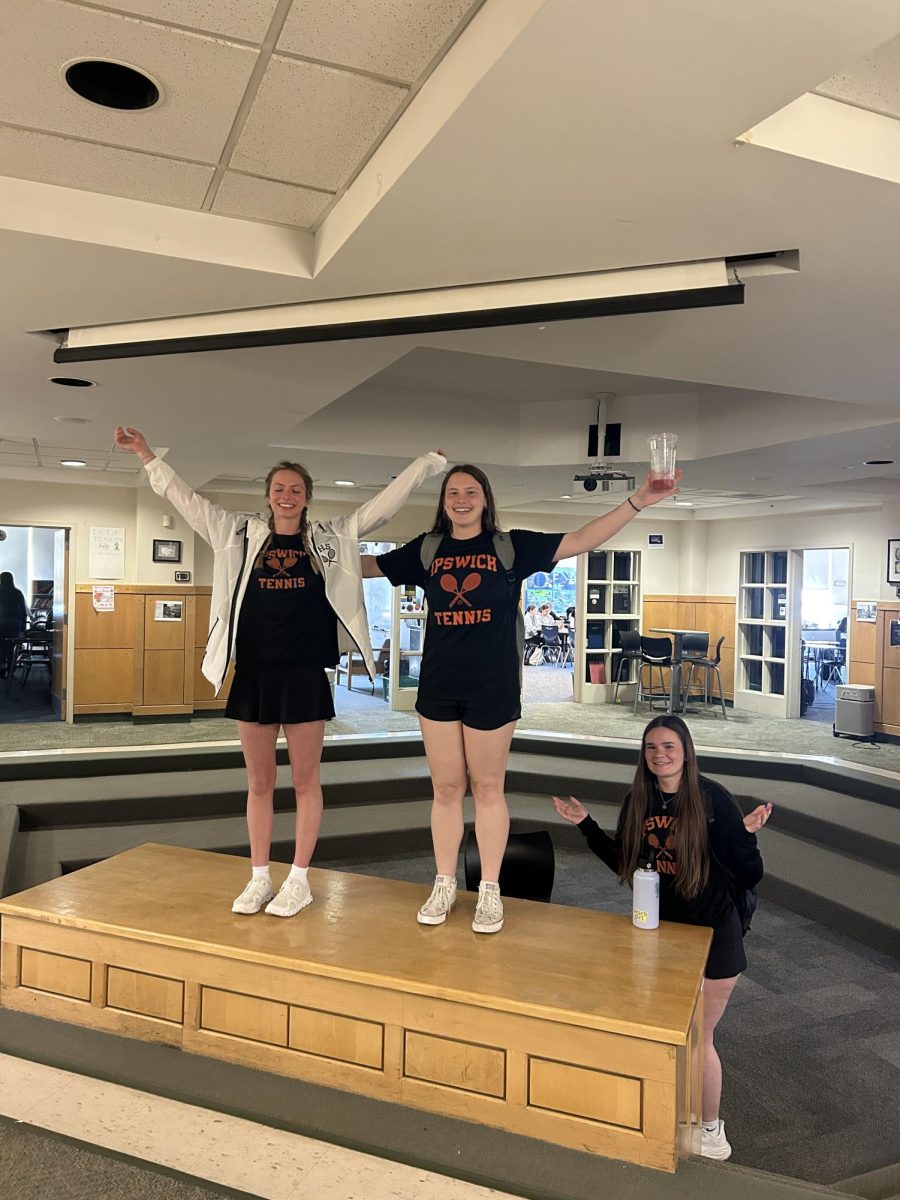
“Can we work in the pod?” is a phrase that is often said by students here at Ipswich High School. Whether it is reading a book, writing a paper, or simply taking a walk, the pods are constantly filled with action. The pod is an area surrounded by classrooms in the lower and upper floors of the high school where students can work in the hallways, in the center of the pod, or at the high-top tables in the corners. Most of the time, teachers let students go out to the pod during the second half of class or near the end, right after a lesson. Recently, pods have been a topic of discussion for teachers and administrators. They want to keep students in classrooms to reduce bad behavior, but is that really beneficial? Discussing the pros and cons are necessary when deciding how to answer this question and for the hopes of ending this long-debated topic.
When we think about learning, we often imagine it occurring in classrooms. But is that the only place where learning can flourish? An article published by Fomcore – a furniture company that focuses on social interactions – states, “Research on informal learning spaces emphasizes that environments that support gathering, visibility, and interaction contribute meaningfully to student engagement and peer learning (Oblinger, 2006)” (Fomcore). This clearly shows us how spaces that function outside of the classroom can be extremely beneficial for student connections and academic success. This led us to create questions for students and faculty at IHS.
After sitting down with vice principal, Leanne Collura, for an in-depth interview on the administrator’s side of the pod debate, we learned what the administrators at IHS think. She told us, “We banned pods during R-block because there was too much roaming around by the students. Teachers said it was hard to manage all the kids, and that it’d be easier for them to be in one place with students.” She went on to say, “The pod is supposed to be a quiet place for test taking, but if too many people are in the pod, there is no quiet space.” She explained that she loves the pods and thinks they are a unique space for collaboration, but that there is just simply a time and a place for them to be used, and that time is not during R-block. But what about during class time? Wouldn’t class time offer a more structured environment for pod use?
We tackled that question in our interviews with history teacher Mrs. Smith and Ipswich senior Maddie Lavoie. Lavoie told us during an interview that she enjoys the pod because she “has more space to work and am not so claustrophobic.” Additionally, she adds that she thinks more work gets done in the pod than in the classroom. Even though Lavoie claims there’s a good balance between work and social interactions, Mrs. Smith has opposing views. Smith hints that a good balance can be achieved, but that it truly depends on the student. She says, “Pods can have their pros, like in a big class, it’s easier to spread out and do group work.” But, she also expresses the cons: “It can be distracting, with there sometimes being 3-4 classrooms out there at a time, as well as lunch passing by.”
At the conclusion of our interview with Mrs. Collura, we asked her whether, in the future, pods could be earned by students, similar to seniors with senior privilege and BRIDGE. Essentially, if you maintain good grades, you could use the pod. She told us she’d never thought about it like that, but that she’ll keep it in mind for next year. This topic remains controversial, with many students arguing for keeping the pods as a positive working space, while teachers/advisors claim they may be detrimental to students’ learning. These two sides do make some valid points, and hopefully, in the near future, they can compromise.