Imagine trying to build a career in a world where basic communication isn’t guaranteed. For many in the deaf and hard of hearing (HOH) community, this is not hypothetical; it’s everyday life. Personally, growing up with two deaf parents, I’ve come to understand that my parents’ experiences, especially in the workplace, are very different from most people’s. They’ve had to navigate a world that isn’t designed with them in mind. One of the biggest challenges the deaf face is communication barriers, especially when it comes to finding employment.
According to the Massachusetts Commission for the Deaf and Hard of Hearing, about 560,000 people in Massachusetts are deaf or hard of hearing. Additionally, “According to the NDC on Postsecondary Outcomes, “only 54% of deaf people are employed, compared to 70% of hearing people.” (Deaf Services Unlimited) Many face workplace obstacles simply because access to communication isn’t prioritized. Some choose careers like coding, writing, and online chats, where communication is more accessible. Organizations like MCDHH work to improve these gaps by providing interpreters and spreading awareness about the deaf community. Their goal is important, to ensure equal opportunities for everyone.
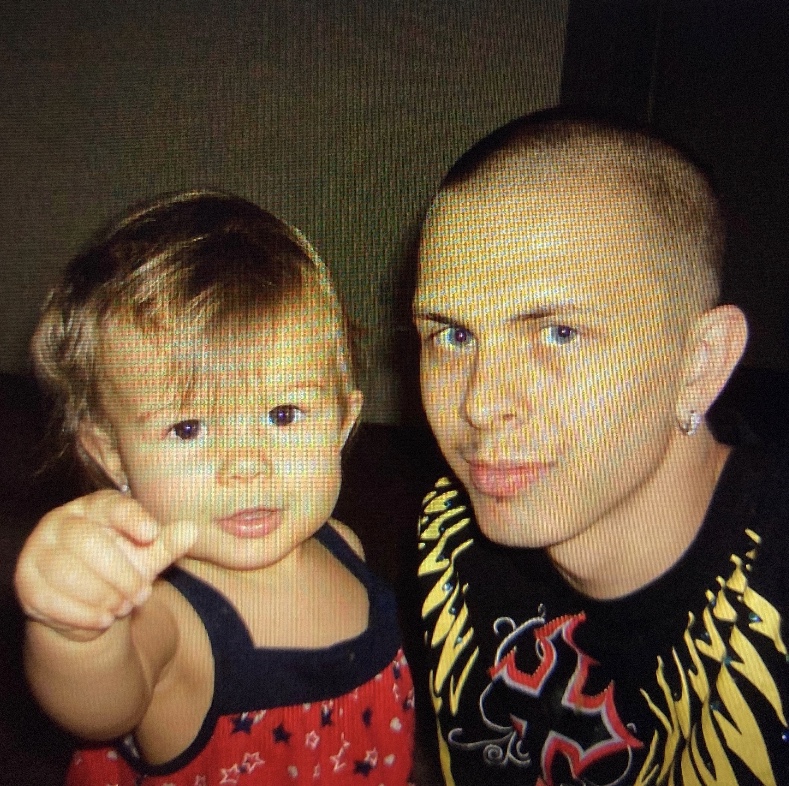
My dad, Brian Taylor, experienced this firsthand while working at Ipswich Ford, where communication is essential. He often had to rely on lip-reading, body language, and written notes to understand his coworkers. While this was difficult, he never saw his deafness as a limitation. Today, he works at the high school as a custodian, where he has helped teach students and staff basic ASL. He says, “They show effort in learning ASL, and it makes a huge difference.” His experience shows that inclusion doesn’t require perfect communication.
Communication barriers aren’t limited to the workplace; they also exist in schools. At Ipswich High School, Mrs. Arch has seen how language differences can make students feel isolated. Growing up in a bilingual Puerto Rican household, she understands what it feels like to not fit the “norm.” She recalled “feeling embarrassed at times when I was younger, but when I got older, I realized how cool and valuable it was to be bilingual.” Mrs. Arch later noted that in more diverse communities, like Lawrence, multilingual families are common. In Ipswich, however, students who communicate differently can feel like outsiders.
These barriers can create awkwardness and hesitation. As Mrs. Arch explains, “students do want to be connected, but they feel nervous about saying the wrong thing.” Her advice is simple, “Embrace the awkward.” She lists three key strategies, “effort, patience, and openness” These matter far more than getting every word right. In her own teaching, she uses effective tools like body/hand gestures and even drawings. She also emphasized the importance of connecting with families through translation apps. Communication can improve when people are willing to meet halfway.
Her message connects strongly with my parents’ own experiences. Their lives show that challenges are not impossible to overcome. Too often, the responsibility falls entirely on deaf individuals to adapt, rather than on society to become more inclusive. My dad’s story is not about struggle; it’s about resilience and growth. His deafness has shaped how he communicates, but it has also allowed him to teach others, build meaningful relationships, and create a more inclusive environment for the deaf at Ipswich High School. His impact proves that small efforts, learning basic ASL or being patient in conversations, can make a meaningful difference.
At the end of the day, my parents’ experience reveals something important. Communication isn’t just about words; only understanding and the willingness to connect with others, even if it’s uncomfortable. Raising awareness about the deaf community isn’t important, but necessary. When people take the time to learn it creates a world where everyone has an opportunity to be heard. Despite every challenge, my parents show up every day with a smile. Working twice as hard to support those around them, without saying a word. That kind of dedication requires a level of strength and confidence that goes beyond most jobs.