In the fall of 2025, Winthrop Elementary School nurse Jon Stafford was placed on leave after making a controversial social media post about the assassination of Republican advocate and podcaster, Charlie Kirk. His absence left the school not only with a crucial faculty position to fill, but also with a larger question about if school faculty should be present on social media and how they should conduct themselves online.
Stafford’s post was flagged for referring to Charlie Kirk as a “white supremacist who thought gun violence and death were just the price we had to pay to have guns,” and stated additionally that “the media needs to stop treating a dead right-wing podcaster like he was anything but garbage.” When the post came to the attention of the school board, concerns regarding the tone and intent of the comments arose and were especially scrutinized based on Stafford’s role as a public school nurse.
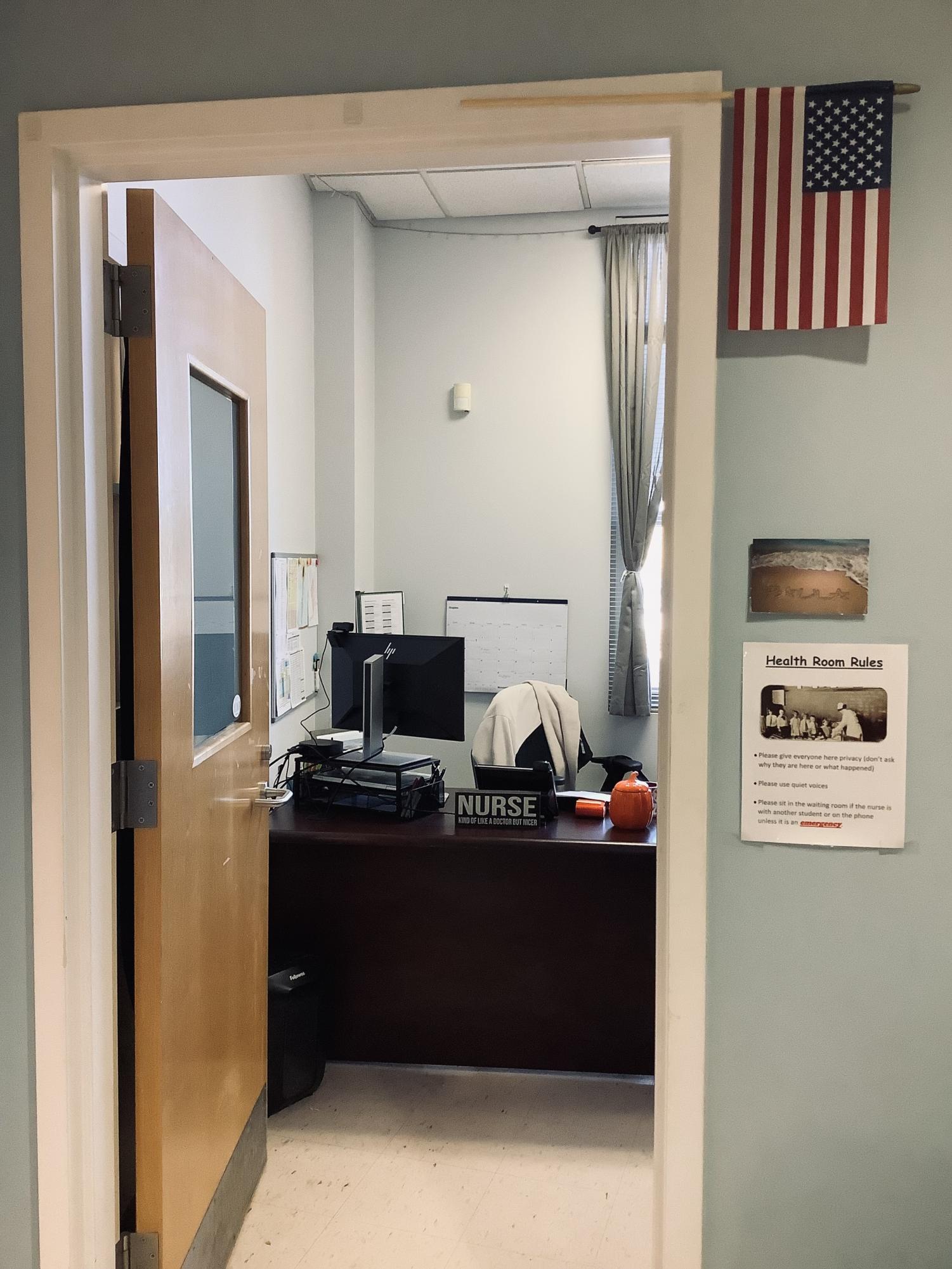
Following Mr. Stafford’s leave, Ipswich High School’s nurse, Paula Butt, was requested to step in to divide her time between the high school and Winthrop Elementary. Nurse Paula describes the challenges of managing two demanding positions at once: “HS students were coming in as I was trying to leave to get to Winthrop.” She stated, additionally, that these circumstances were unfair to the students.
To Nurse Paula, being a school nurse means, “You never know what will walk through the door at any given moment.” On a typical school day, she handles between 30 and 40 visits, sometimes more, and is responsible for monitoring students with diabetes, seizures, and other health conditions. Doubling that workload took a toll not only in her school life, but also at home. Paula is currently back in school completing a master’s program in addition to the chaos of the Ipswich School district: “I had to pause all my master’s work, and miss time with my children that I will never get back,” said Nurse Paula.
This initial conflict revived a bigger conversation: What are the actual guidelines and expectations for teachers and staff regarding social media use – and why do they exist in the first place?
Keira McPartlin, a senior at Ipswich High School, is an active participant online and uses social media both personally and professionally for her photography business. McPartlin believes, “Everyone is allowed to say whatever they want, that’s not necessarily the problem, but I think the problem is when things are being said that have an intent to potentially harm others.”
This perspective clarifies that the issue regarding social media isn’t specifically what is said, but why it’s said. A popular IHS teacher said that social media leaves a lot of room for misinterpretation and taking things out of context. Overall, comments that are meant to cause harm or upset to others do not reflect the values of Ipswich Schools or the IPS Policy Manual. The manual clearly states that “staff members are responsible for teaching and for modeling responsible digital citizenship.”
Ipswich Public Schools emphasizes that teaching should never involve animosity or lead to actions that could possibly cause upset among students and their families. The above teacher described, educators are expected to set an example for students not only within the school building, but outside as well in how they conduct themselves and this includes their online footprint. To ensure this, the Ipswich policy clearly states that any online behavior that could be considered inappropriate in the classroom is equally inappropriate on social media.
While this issue continues to spark debate throughout the town of Ipswich, one point remains clear. As the teacher emphasized, the safety and well-being of all students, teachers, and faculty must always be the first priority. The ongoing conversation about social media and professionalism often leads to controversy, but everyone can agree that these discussions should be had with a focus on maintaining safety and trust within school walls.