
Artificial intelligence, or AI, is becoming more common in high school classrooms, changing how students learn and do their assignments. Tools like ChatGPT are no longer just a future idea; they are being used by students and teachers today. AI can help students understand difficult topics, but it also creates challenges that need to be managed carefully.
For many students, AI is a helpful tool rather than a way to avoid work. Pablo Goncalves, a senior at IHS, says he mainly uses ChatGPT for math. “It gives step-by-step explanations that help me understand the problem,” he says. “It doesn’t do the work for me; it helps me learn how to solve it myself.” By showing each step clearly, AI helps students understand problems they might struggle with. Pablo also uses AI in other subjects, mostly for brainstorming ideas and thinking of different ways to approach assignments. For example, when he has a writing project, AI can suggest ways to organize ideas. Research from the Lumina Foundation shows that students find AI useful for learning and creativity, but many worry about relying on it too much.
Pablo shared an example of a project in his American Government class, where students rewrote a song to explain how a bill becomes law. The AI tool Google Gemini was used to guide ideas, but all final work came from students. This shows responsible AI use, helping students think without doing the work for them. Research from the Harvard Graduate School of Education shows that students are already using AI a lot and want clear rules so it is used fairly.
Teachers also see benefits. Mr. Harvey says students who use AI the right way can work with harder reading and more complex topics. He also says, “Some students have been able to use AI as a stepping stone over challenging material, while others have used it as a crutch to complete work that they don’t want to do.” Evidence from the University of Illinois shows that AI can improve learning when used carefully, but there are also risks like bias, cheating, and over-reliance.
At the same time, AI must be used carefully. Overuse can reduce student independence and critical thinking. Mr. Harvey warns that “students are at risk of losing critical thinking/problem-solving skills by using AI.” Research in a National Institutes of Health study supports this, showing that too much reliance on AI can weaken independent thinking. Reporting from Education Week also says that more AI use in schools may hurt critical thinking if it is not managed well.
AI is also changing how teachers plan lessons. Some, like Mr. Harvey, ask students not to use AI for homework until they are taught how to use it the right way. Teachers often have to rely on student honesty when it comes to AI use. Structured assignments can show students how to use AI as a tool, not a shortcut. Research shows students want clear rules, which can reduce misuse while still allowing benefits. As Mr. Harvey says, there can be a “happy middle ground”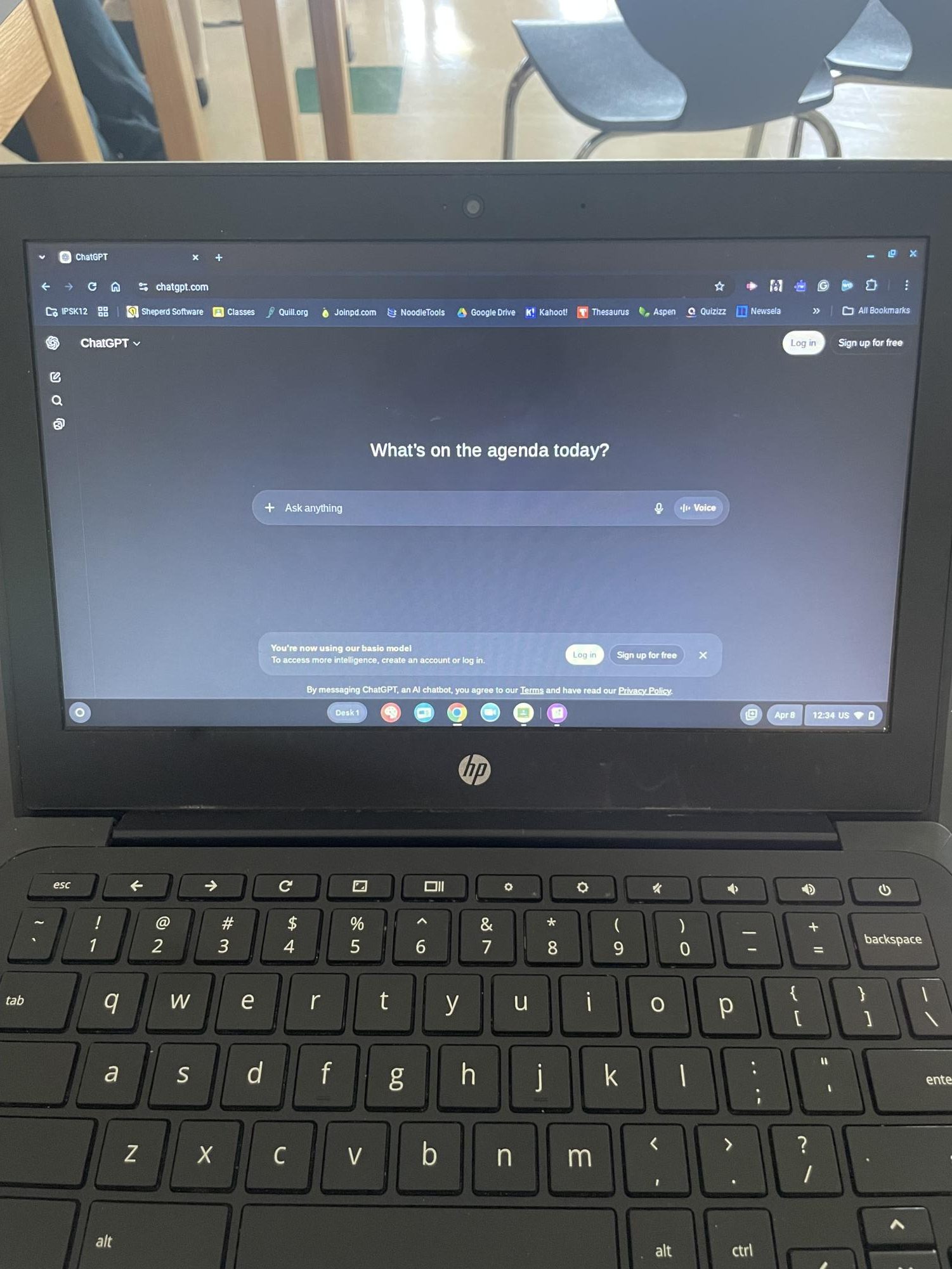 if clear expectations are followed.
In conclusion, AI is changing high school education in important ways. When used the right way, it helps students understand topics and improve problem-solving. However, it also creates challenges like over-reliance and less independence. With clear rules and responsible use, AI can support learning without replacing student effort.