
In today’s world, ambition is almost expected. Students are told to challenge themselves, take hard classes, join clubs, play sports, get a job, all for one thing: to stand out to colleges. However, when dedication turns into exhaustion, even the most driven students begin to wonder if success is worth the costs.
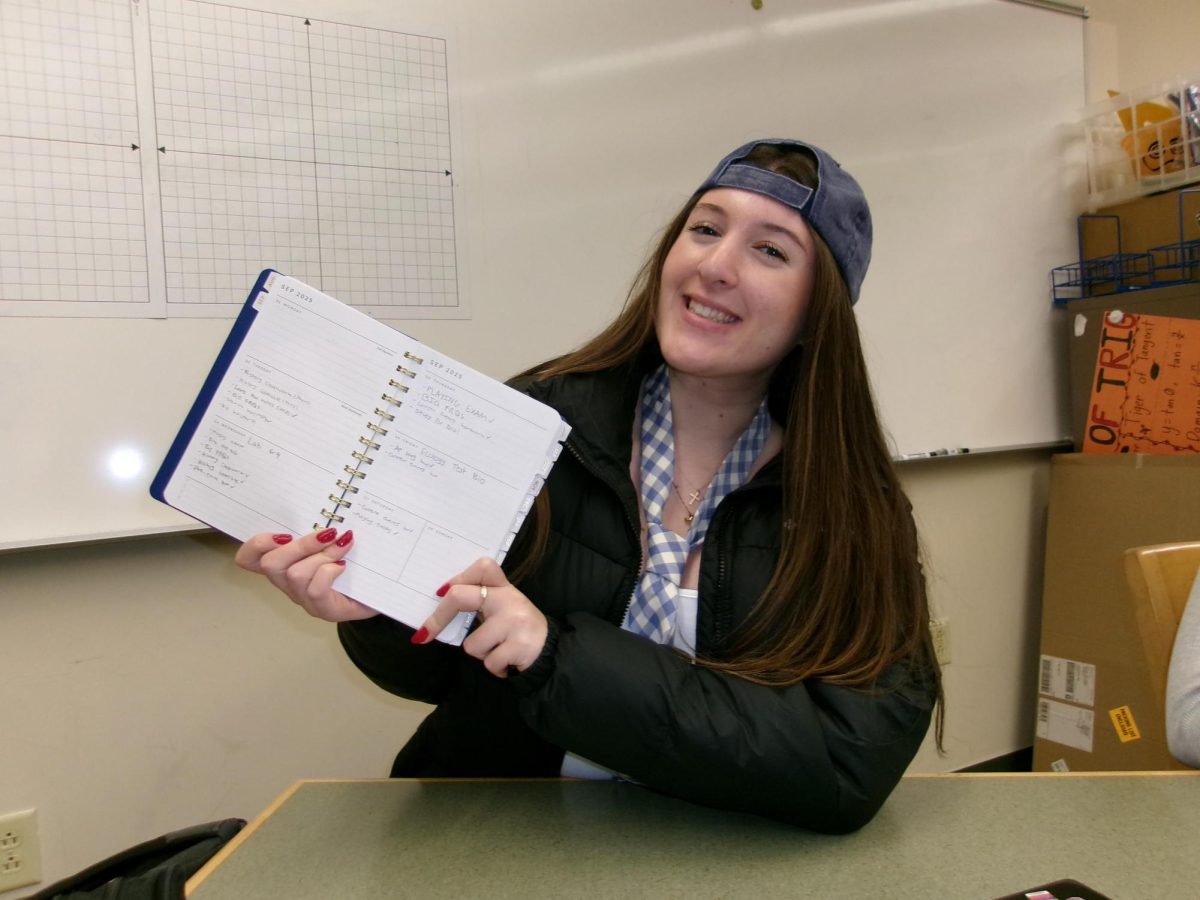
Juliana Jimenez, a junior at Ipswich High School, knows that struggle well. As a member of DECA, the 40% club, ASL club, Environmental club, Photo club, Chamber Orchestra, on top of being a captain for the cheer team, her schedule barely leaves her with time to breathe. On top of that, she works part-time as a hostess at The Farm in Essex.
On a typical Thursday, her day begins bright and early at around 6:20 am and doesn’t end until well past midnight. After school, she goes straight to cheer practice, then home for a short nap and a snack before picking up her violin to practice for Chamber Orchestra. Dinner happens soon after that, and by 6:45 she’s already heading out the door again for rehearsal, which runs from 7 until 9 pm. “I don’t get home until after nine”, she explains. “Then I have to shower and do homework. I usually don’t go to bed until at least midnight.”
Juliana admits she often has to chip into her sleeping time just to get through all her school work and hardly has a moment to herself. “Chamber Orchestra is really demanding and AP Bio takes up a lot of time too,” she added.
Her motivation comes from her aspirations and dreams. “My future and my dreams of going to Boston University keep me going,” she mentioned. “I know I have to go above and beyond to qualify and have a chance of getting in.” But that determination comes at a cost. “It’s making me sleep deprived,” she said. “I have bad insomnia, which leads to my anxiety and makes my ADHD worse. School makes me very anxious.”
Ms. Morris, an art teacher here at IHS, has seen this pattern play out across classrooms. “The workload is unbelievably high, historically high,” she noted. “Every year I have students who need a class period to just catch up on homework or sleep. They’re not lazy; they’re simply stretched too thin.”
She believes that the culture around academic achievement has gone too far. “There’s homework in every class to ‘add rigor’, plus SATs, sports, and community service,” she said. “Students feel like they have to take AP classes in subjects they don’t even like just to look good for colleges.” To Ms. Morris, the focus should shift from pushing students to supporting them. “If a kid loves music, why push them to overload on math and science?” she questioned.
Both Juliana and Ms. Morris believe schools could do more to help students find balance. Juliana mentions that even small changes could help, like lighter homework loads or giving students time in class to get a head start on assignments. “Even fifteen minutes would make a difference,” she said.
Ms. Morris agrees, but she also wishes adults would recognize that today’s pressures are different. She explains, “Parents and teachers sometimes say, ‘I did this, so you should be able to handle it, ’ but it’s not the same now. The college culture and expectations are way more intense.”
For students like Juliana, being ambitious isn’t the problem; it’s the constant pressure to do everything all at once. Dedication can be a great thing, but when it starts to damage mental health, it might be time to rethink what success really means.