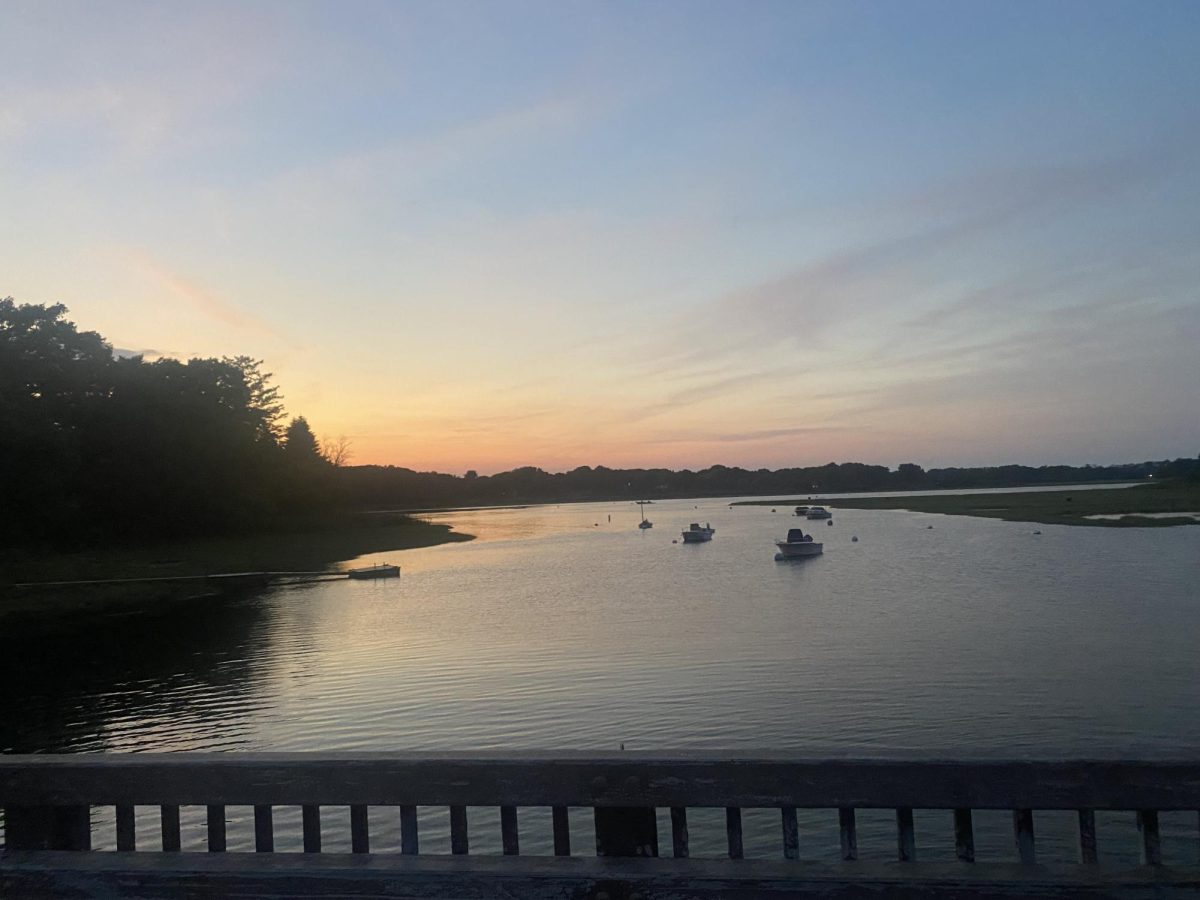
In recent years, flooding from high tides and coastal storms has become more common in Ipswich, especially in low lying areas near the water such as Great Neck. These changes have increased concern about the town’s salt marshes, which play a key role in protecting communities from rising seas. Salt marshes act as natural buffers by absorbing excess water during storms and high tides. However, as sea level continues to rise, it is becoming harder for these ecosystems to keep up.
Ms. LaFrance, a science teacher at Ipswich high school who teaches biology, marine & coastal science, and AP environmental science, explained how marshes reduce flooding. “The marsh acts like a sponge to soak up the extra water before it reaches homes, businesses, and built up areas,” she said.
Although marshes are effective at slowing floodwaters, they are in increasing stress by rising sea levels. Ms. LaFrance explained that while some marshes are able to build up at the same rate as sea level rise, others are falling behind. She reports, “We are seeing areas that are muddy with no vegetation,” indicating that parts of the marsh are struggling to survive as water levels increase.
Research predicts that these challenges are likely to get worse. The U.S. Interagency Task Force on Sea Level Change predicts the sea level along the East Coast will rise between 10 and 14 inches over the next thirty years. In Ipswich, this poses a serious threat to those already vulnerable roads and areas that frequently experience flooding. Jeffreys Neck Road is one of the most vulnerable areas. According to Ipswich Local News, the road floods six to twelve times a year, cutting off the only access to Great Neck and Little Neck and the approximately 750 homes there. Climate vulnerability assessments predict that by 2070, portions of the road could be underwater during high tide. In response, the town plans to raise sections of Jeffreys Neck Road and Island Park Road by roughly 3 feet.
Efforts are also being made to strengthen the marshes themselves. For example, there are man-made ditches being filled in which will make the marsh more resilient, according to Ms. La France. She also emphasized the importance of limiting pollution, especially fertilizer runoff. She reported that, “when nutrient levels are too high, the roots don’t grow as deep to hold the marsh together.”
Residents in coastal areas are already experiencing these impacts. Colleen, a senior at Ipswich high school and Great Neck resident, described how flooding affects daily life. “Sometimes my family and I go on walks to the beach, and we get down to the hill and realize we can’t even go on the beach because the water is so high,” she said. She added that flooding can also make roads difficult or even impossible to use.
In some cases, flooding has disrupted normal routines. Colleen recalls, “one time we couldn’t go to school because the road was flooded.” This really goes to show how these environmental changes directly affect the residents in these high risk areas.
Ms. LaFrance emphasized the importance of educating students about local environmental issues. She explained that understanding these real life problems prepares students to make informed decisions and better anticipate the impacts of climate change. “If we’re prepared,” she advised, “we will have less of a negative impact.”
As sea levels continue to rise, Ipswich’s salt marshes remain an important line of defense. Protecting them through conservation, infrastructure planning, and public awareness will be crucial to reducing future flooding and keeping the community protected.