
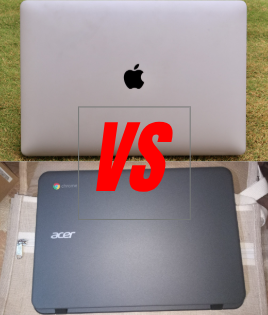
Students at IHS have long enjoyed the privilege of using their personal devices from home at school, opening up opportunities to have a more personalized school experience. With many students not being able to afford personal devices and the scandalous activities opened up by the use of these personal devices, the question had to be asked: is this policy that allows personal devices really benefiting the students at IHS? This question was answered by the school board in the fall of 2024, when a new policy was implemented banning the use of all personal devices in the classroom. The new policy was met with mixed results, giving relief to many teachers, while being met with outrage by some students.
While these complaints regarding the personal device ban may appear quite biased, they are not made without reasoning behind them. It is found that requiring school issued chromebooks hinder students creativity and ability to expand their knowledge beyond basic classroom curriculums. School issued chromebooks are also known to have very poor durability. This, combined with many schools delaying repairs as a result of budget restrictions, can create a burden on productivity in the classroom.
One of the main concerns surrounding personal device use is the claimed competitive edge to those that can afford a laptop. A Swedish study on 1:1 computer policies (an initiative in which every student is given a dedicated school provided device) found that such inequalities may not exist. Author Caroline Hall concluded from the study, “We find no evidence suggesting that 1:1 technology, in comparison to more limited computer use, has an impact on average performance in language and mathematics.”
Initiatives in support of the ban are also backed with evidence. Lenient policies surrounding personal devices have historically led to students not bringing their school issued chromebooks to school. This proves problematic because many standardized tests such as the MCAS rely on browsers such as Testnav, in which the school can only operate the site on their own chromebooks. While it may not affect test scores, students’ varying economic situations could result in a social divide with personal devices being used as a status symbol. Personal devices may also prove to be a security threat, with students being able to bring viruses from their devices to the school network whether it be on purpose or on accident. In 2019 at a New Jersey high school, two students were able to take down their schools wifi signal to avoid online testing, doing so by using their home laptops to send an overload of traffic to the school’s router, resulting in a system crash.
In the case of the policy at Ipswich High School, the majority of students appear to be against it. Current senior at Ipswich High School Nate Pitner implied that work is more enjoyable for students with their own device: “Using my own computer helps me organize and sort work due to its smooth feeling and better applications available.” Due to Nate being able to use the same applications to follow the curriculum, he doesn’t believe that his personal device grants him an advantage over other students. In Nate’s experience he believes that since the policy has been implemented, it’s only been getting stricter, with more teachers enforcing it. Although this is the case, he doesn’t believe that he’s being targeted or singled out for having a personal computer, for students all across the school have shared similar experiences. With that said, he does think that some parts of the policy were poorly translated to students such as it being made unclear whether students can use it for online classes including VHS or dual enrollment.
With varying opinions on the personal device policy, it is no surprise that the policy has also been met with support. This is due to the fact that without the ability to access a student’s personal computer, issues are created with students being able to get away with plagiarism or cheating. Ipswich High School’s director of technology Keith Borgen expresses how personal devices complicate usage of necessary academic software, stating, “The best practice is for students in the district to be using district owned devices, buying software that’s not made for the district can’t be put on personal drives making it more difficult to manage. Policing devices not owned by schools is simply more difficult.” While such policing is possible, there is most likely no way to access necessary features of a student’s personal device without violating a students’ privacy.
It is clear that personal devices can provide a range of benefits to individual students, but also create conflict in the larger school system. In order for students to be able to learn without distraction, and for teachers to teach without concern of cheating, it might be necessary for the policy to continue at IHS for the time being. Fortunately for IHS seniors who are eligible for senior privilege and want to use their computers from home, the privilege to use personal devices will return as of the beginning of quarter 2. This system allows responsible seniors to ease into the freedoms of adulthood while also acting as a motivator for seniors who want to use their own devices for the sake of pursuing higher academic accomplishments. Having completed its first full year with relative success in the eyes of administrators, it is safe to say that the personal device policy will not be leaving IHS in the foreseeable future.