
Many students involved in the Ten80 race competition describe it as “another fun engineering class,” but the program offers far more than entertainment. Through hands-on problem solving, teamwork, and competition, Ten80 gives students a practical introduction to engineering and what the process is like. While the program has its challenges, participants mostly agree that the experience motivates them, builds real world skills, and increases interest in STEM fields, students say.
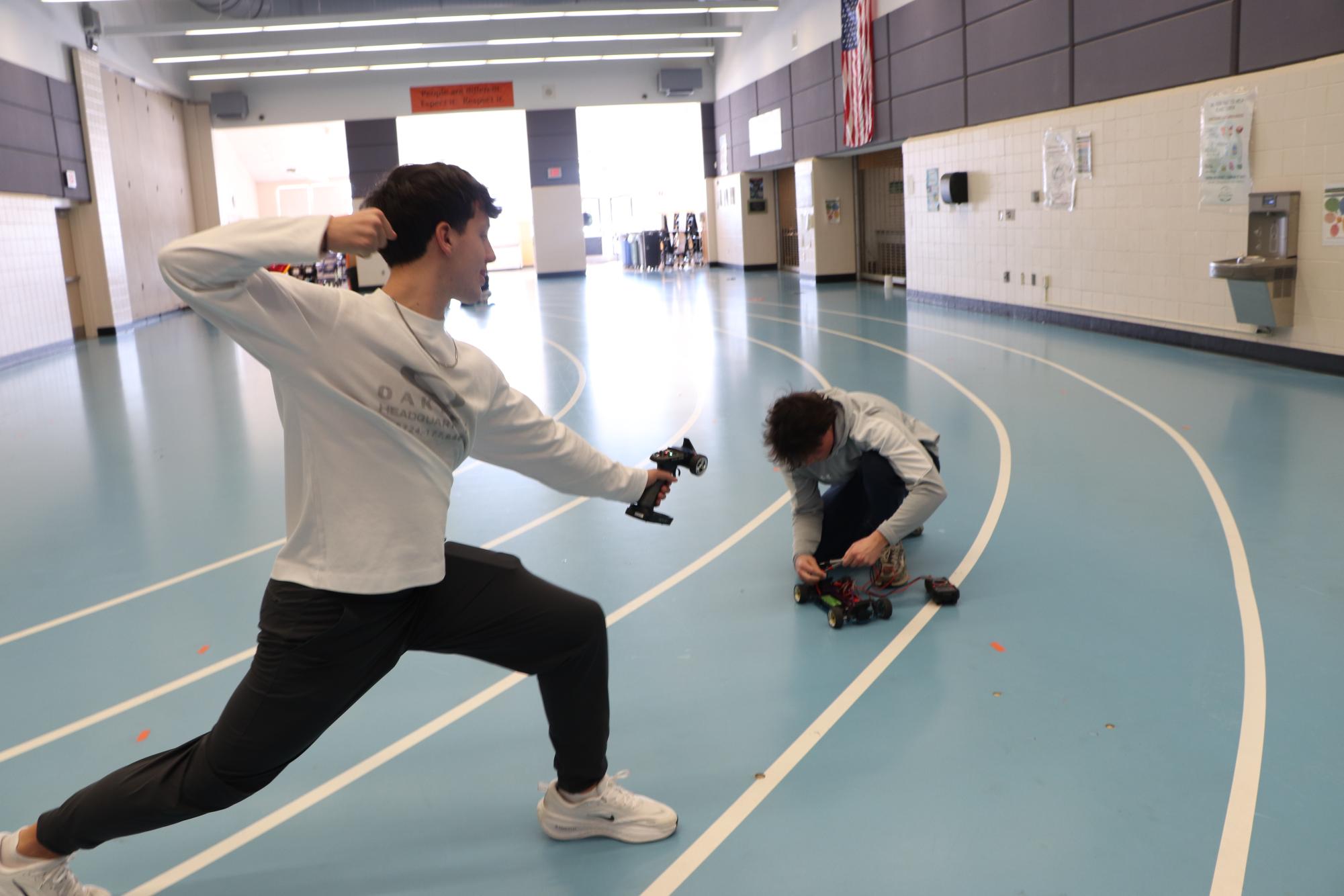
 Ten80 is a nonprofit designed to teach STEM concepts through interactive challenges in the form of a points race. One of its most prominent programs is the Ten80 race competition, an international event centered around remote controlled cars, assembled and optimized by students and their data. Students work in teams to design, modify, test, and race their cars while collecting data and developing solutions backed by data. Each year, teams can qualify for a National Competition, where they compete in a series of races and technical challenges to determine an overall winner.
Preparation for the competition is demanding, but unlike traditional classroom settings, Ten80 emphasizes hands-on work and real application, which has gotten positive feedback from the students. One student explained that the program allows them to “work with their hands,” which makes the class feel engaging instead of repetitive. Another student noted that the work feels motivating and “not like a chore,” because students can see the direct results of their effort in the performance of their cars.
A major source of that motivation comes from the problem-solving process itself. In Ten80, things seldom go smoothly. Cars break, parts malfunction, and designs fail. When this happens, students must analyze the issue from a mechanical perspective and figure out how to fix it. This trial and error process mirrors real engineering work. One participant who plans to pursue marine mechanics said the competition gave them “a better understanding of how electric things like motors work and how important precision is.”
Beyond technical skills, Ten80 also strengthens teamwork and organization. Students learn how to manage large projects by dividing responsibilities and working collaboratively. As one student explained, learning to “split things up into smaller groups” helps teams complete tasks more efficiently and stay on schedule. These project management skills are critical not only in engineering, but in many future careers.
Competition plays a central role in driving student engagement. Several participants said the race environment “gives people a motive to outwork their peers,” pushing teams to improve designs, refine strategies, and perform at a higher level. Rather than discouraging students, the competitive atmosphere often inspires them to take greater pride in their work and invest more effort into the project.
For many students, Ten80 has influenced their long-term goals. Participants report that the program has increased their interest in STEM courses and careers, while also teaching them valuable lessons about planning, collaboration, and responsibility. However, students are also aware of the program’s limitations. Some noted that the Ten80 website could be clearer and easier to navigate, which can make preparation more difficult. Others mentioned that the cost of participation creates challenges when it comes to fundraising and securing financial support. Additionally, some teams feel that competition criteria can be inconsistent and difficult to interpret.
Despite these challenges, most students believe the benefits of Ten80 outweigh its flaws. The program offers a learning experience grounded in real-world application, creativity, and teamwork. By allowing students to experiment, fail, and improve, Ten80 prepares them not just to compete in races, but to think critically and solve problems like engineers.