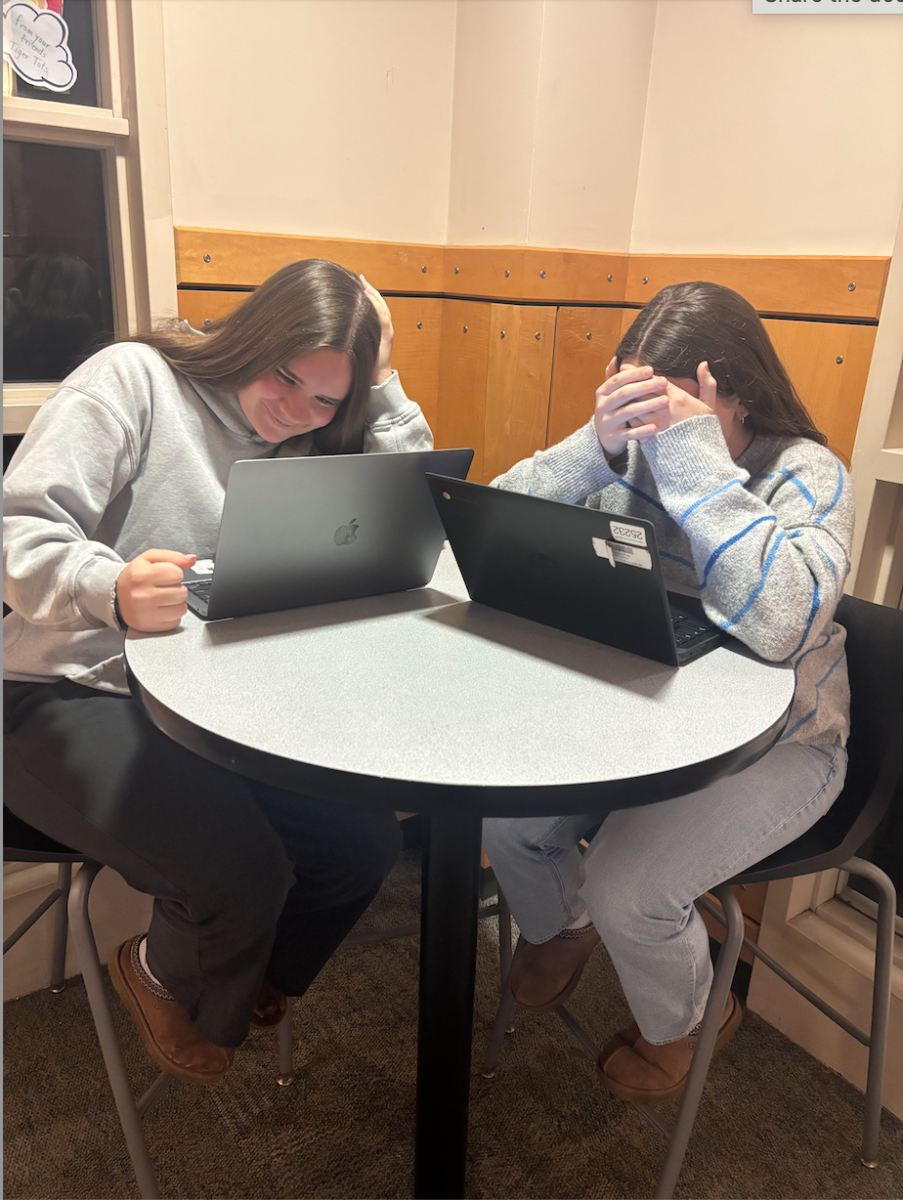
Go anywhere these days, and you’ll see it: dozens of people together, yet each one of them is lost in their phones, eyes glued to glowing screens while real conversations fade into the background.
I talked to Mrs. Scott, one of our adjustment counselors at IHS, and Ava Croce, president of the 40% club, to get their thoughts on how social media really affects our mental health. Mrs. Scott explained, “I think social media affects people’s mental health more negatively than positively. I think that it has a huge effect on day-to-day mood and mental health, and you don’t even notice when your mental health is getting bad; it just builds up over time.”
That’s the scary part; it’s not like one bad day that you can point to. It’s gradual, like water slowly filling up a cup until it overflows. We’re all just scrolling through our feeds, not realizing how much it’s actually affecting us until we’re already feeling terrible.
Here’s the thing: High school is already stressful without social media adding to it. Between trying to keep our grades up, studying for SATs or ACTs, managing sports or club commitments, and figuring out what we’re doing after graduation, we’ve got a lot on our plates. Some of us have jobs too or family responsibilities at home.
And then we open Instagram or TikTok and see everyone else looking like they have their lives completely together. It’s exhausting. Social media just adds another layer of pressure on top of everything we’re already dealing with; we don’t need to worry about whether our post got enough likes or if we look as good as someone else’s carefully edited photos.
In some ways, social media is supposed to help us stay connected, but Mrs. Scott pointed out that it’s actually doing the opposite. “It makes people more connected when they can be physically with each other, but it is making people disconnect when they are actually with their friends. When one of you is on TikTok or Instagram, it’s taking away from being present and having time with each other.”
She told me about something she saw before they banned phones during school. “I saw a group of freshmen walking down the hallway, and every single one of them was looking down at their phones. It made me sad. I’m worried that people are missing out on social activities, connection, and time with each other.”
It’s something we’ve all seen, or maybe even done. We’re physically together but mentally somewhere else entirely, scrolling through the lives of people who aren’t even there. And meanwhile, we’re missing out on actual memories we could be making with the people right in front of us.
When I asked Ava about her thoughts, she didn’t hesitate. “Social media affects people’s mental health mostly negatively. Most of the time, people compare themselves, and they think it’s mostly girls who do it, but it can also relate to guys, too.”
She’s totally right. Everyone’s doing it, even if we don’t want to admit it.
The problem is that everything online looks perfect. Ava explained that seeing other people’s “perfect” lives can “set the standard and is unrealistic, like looks and money.” It “makes you want more, but not in a good way, but in an unrealistic way.”
And then there’s the whole likes thing. “If someone has a lot of likes on an Instagram post, you compare it to yours, and think, ‘Do people like me?'” Ava said. It’s like this constant measuring stick that we use to judge our worth, which is pretty messed up when you think about it.
The worst part? “Social media makes it mostly harder for people to be confident with who they are because it’s easy to compare to other people. You can only see what other people have and compare it to what you have.” We’re constantly looking at everyone else’s highlight reel and comparing it to our behind-the-scenes reality.
Look, social media isn’t going anywhere. We all know that. But these conversations made it clear that we need to start paying attention to how our screen time is affecting us. Maybe it’s time to put the phones down a little more often when we’re hanging out with friends, or at least recognize when we’re falling into the comparison trap.
Mrs. Scott pointed out that “social media affects teenagers more than adults because their brains are still developing and they are more easily influenced.” But she also reminded us that “adults tell teens to spend less time online, but they should reflect on their own habits too.” It’s a problem that affects everyone, not just us.
It’s not easy, especially when we’ve already got so much going on. But our mental health is worth it. We deserve to feel good about ourselves without needing validation from a screen.