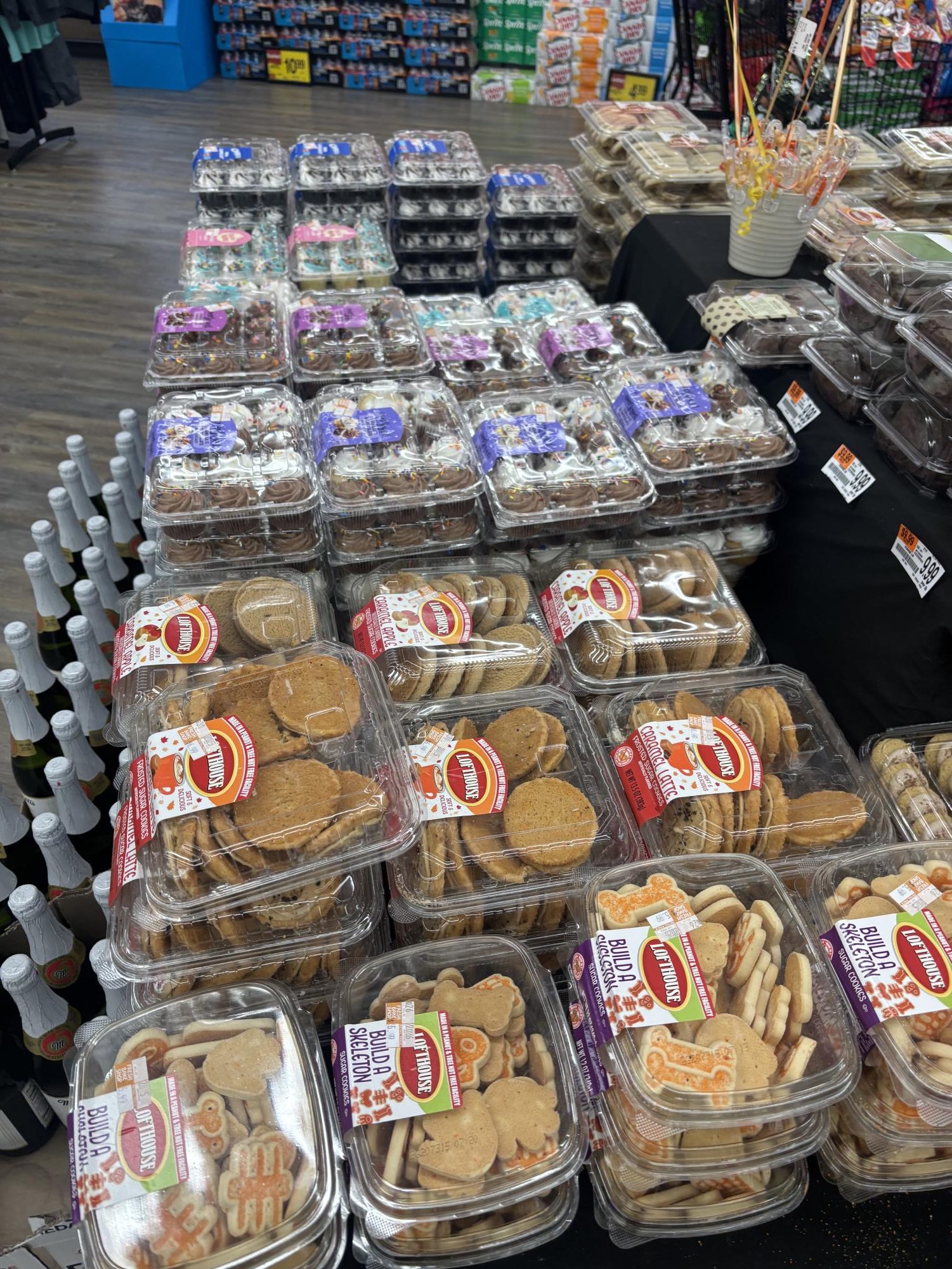
Earlier this year, students at Ipswich High School were surprised by a change: no more bake sales during the school day. According to Principal Mitchell, the rule wasn’t a local decision but a state-driven shift. “The change was to bring the district into compliance with Massachusetts state policy,” he said. “The district had been out of compliance for a long time without realizing it.”
The regulation comes from state law under 105 CMR 225, which governs “competitive foods” sold during the school day, midnight to 30 minutes after the final bell. It limits fund-raisers to foods that meet strict nutritional standards and effectively bans most homemade goods during school hours. Clubs relying on food-fundraising are feeling the pinch. “Bake sales are one of our most common options,” said Maggie Carlberg, President of the Interact Club and member of the theater program. “Without them, we’ve had to get creative, bracelet sales, thrift stores, or even a drive-in movie, but not every club has the capacity to pivot like that.”
Still, the change isn’t entirely without benefits. Massachusetts’ nutrition rules align with national studies showing that schools with stronger snack policies often see healthier eating habits among students and higher participation in school meal programs. With the state now offering universal free school meals, schools may even recover some lost fundraising revenue through increased meal participation. Limiting homemade food sales during the school day also reduces allergen and food-safety risks, creating a more consistent environment for students with dietary restrictions.
To adapt, clubs and schools are exploring alternatives that work within the policy’s limits. Some plan to hold bake sales or cultural food events after school hours, once the 30-minute restriction lifts, allowing homemade items to return in a new time slot. Others are turning to pre-packaged snacks that have the “intent” to be eaten after school, like the NHS’s fudge sale, to satisfy the spirit of a traditional fundraiser.
Principal Mitchell said the administration’s goal is not to eliminate fundraisers but to guide them in new directions. The district plans to share the state’s “A-List” of approved snack items and help clubs identify options that meet the rules. He emphasized that the intent is “enabling fundraising within the limits rather than banning it entirely,” though formal outreach to clubs has not yet begun.
Still, some students worry about unintended effects. “It can be more detrimental than helpful,” Carlberg said. “It reinforces the idea that certain foods are ‘bad,’ which can be harmful for students with eating disorders.”
As the school balances compliance with the community, many hope the conversation will shift from restriction to creativity. The end of in-school bake sales is reshaping how students approach fundraising with more strategy, and through that change, we hope that Ipswich may uncover some new traditions that are worth keeping.