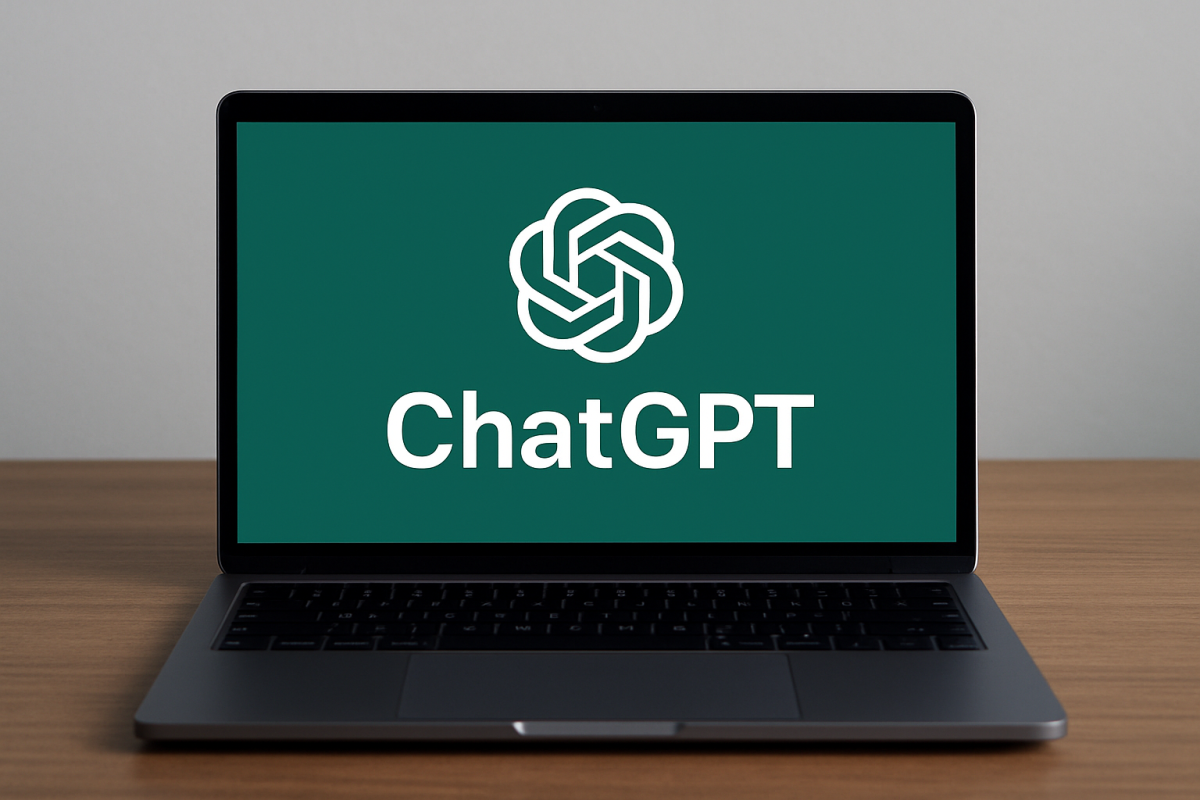
Artificial intelligence (AI) has become one of the most influential technologies of the modern era. It allows machines to analyze data, learn from experience, and perform tasks that once required human intelligence. As AI continues to evolve, it is transforming industries, shaping our daily lives, and raising new questions about the future of technology and society.
That was written entirely using ChatGPT when asked to write a short 1-3 sentence intro to an article about AI.
AI can be a hard thing not to use. It’s pretty tempting late at night when you have a math packet or writing assignment the next day and you just want to get it done. Speaking from personal experience, typing your questions into AI, then getting all the answers and the work is a breeze and can relieve a lot of stress regarding assignments. However, when test time comes around, using AI can leave you unprepared and in danger of failing.
Yannis Christ, a senior, admitted to using AI. He said that he used it mostly for writing assignments, not to generate full works but to get recommendations on grammar and generate ideas to work off of. During this interview, Yannis was in the IHS musical, which put a large strain on his time, and according to him, he felt that using AI was “a bit of a necessity” when time was tight and work needed to get done.
Mrs. Slawson, an English teacher, uses AI even less, only once or twice a month. She admitted to using it for menial and repetitive tasks as well as AI overviews on google and such.
Currently at our school AI is not allowed unless given explicit permission by a teacher. Depending on how many times you’ve been caught using it, you’ll either be warned or even receive a detention. Currently, there is not much in terms of legislation in our country for AI, but many people are pushing for restrictions.
AI stands for artificial intelligence, but the way AI currently works isn’t really that. It has no ability to truly generate anything original. It’s a complex algorithm that, put simply, scans its data for the most common words and responses and compiles it into an answer for whatever question is asked.
I think the biggest positive use of AI in school is as a tool to edit and revise essays and other writing based assignments. It helps to have a quick fix for spelling and punctuation errors or to give recommendations on where certain areas could be improved. It also can be used to do practice problems for different subjects and get more proficient at a certain type of problem. This is something that I did pretty regularly through junior year since I struggle with math. However, having a tool that can give me infinite practice problems was a huge help. Overall, AI should be primarily used to edit and practice. Also outside of school AI could be revolutionary for things like combing through data or summarizing information or even just doing menial work.
Unfortunately there have been many disturbing cases of social interactions with different AIs that have taken tragic turns. One such case which has gone to the supreme court was that of Adam Raine
Adam Raine was a 16 year old boy who sadly committed suicide after consistent interactions with an OpenAI chatbot. Adam began using the chatbot in September 2024. According to NPR, the bot “became the teenager’s closest confidant” within a few months, and by January 2025, the family alleged that Adam had begun discussing methods of suicide with the bot. Adam also began showing the bot pictures of self harm. The family alleged that the bot “recognized a medical emergency, but continued to engage anyway”.
The case of Adam Raine shows how dangerous AI can be when not regulated properly. AI is designed to farm engagement and hold people’s attention. To do this, the bots are made to be as agreeable as possible. Raine’s bot should have stopped the conversation after Raine started talking about suicide methods and sending it pictures of self harm. Sadly, there are no federal laws that directly regulate AI in the US as of right now.
When asked about the future of AI, Mrs. Slawson gave us a positive take on how AI will develop. She said she sees AI going down the same road as the computer when she said, “As it develops and as we learn more, it will be integrated more into our lives but in a way that mitigates the harms and emphasizes the benefits”. It’s hard to think of a time when everyone in the school didn’t have a personal computer or a personal smartphone. Once AI is properly regulated, it will most likely become a part of our day to day lives, like the cell phone or computers.